
Buy anything from 5,000+ international stores. One checkout price. No surprise fees. Join 2M+ shoppers on Desertcart.
Desertcart purchases this item on your behalf and handles shipping, customs, and support to Guyana.
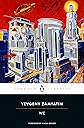
We [Zamyatin, Yevgeny, Brown, Clarence, Brown, Clarence, Brown, Clarence, Gessen, Masha] on desertcart.com. *FREE* shipping on qualifying offers. We Review: An Examination of Us - Yevgeny Zamyatin in his creation of We the novel allows the reader into the personal issues of a number of the One State. This internal struggle not only affects the mind of this number but it starts to get him into situations that he never imagined. While this overall plot is an impressive feat, it is the inner working that Zamyatin is subtly commenting on that really drives a reader to keep going. The dystopian world the Zamyatin sets up has both equal creativity as well as reality. The time he is writing in, during world war one and his own country’s revolutions, brings forth a fear that readers of the time could relate to. This dystopian world was a possibility, in some capacity, for all of it’s futuristic details, and as the readers of the time, settled into their minds for the long haul. As a present day reader, it still resonates ninety years later. As a member of the One State, the character D-503 brings to light the rebellion within us all. Whether we like it or not, it seems hardwired within our system to question what is around us, including our authorities and systems. And yet, his final choices contrast to the struggle underneath all humans: order and the loyalty of repetition. We have proven as people that we will give up freedom for peace, and will submit to the yoke if the promise is happiness. The allusions the Zamyatin makes to the weakened human soul, of any soul being a negative thing, only enhances the fear we may one day feel as members of this futuristic One State. The book brings about many emotions in a reader, but leaves some parts hanging. Whether this is the intent of the author or not, I was left wanting a little bit more. I wanted to see the next chapter of the book, which I guess all good books have within them. While it was difficult going through the first few chapters, or entries, it was well worth hanging on to see the result. Each entry gives a little more insight to the picture, and sometimes I got that D-503 was either letting it all out, his entire thoughts, or that he was holding something back, for fear of making it come real. The vivid descriptions allow one to easily picture life in the One State, allowing the reader to proceed as they will: personally, I took it in as D-503, trying to see as he saw, and not watching him from above, an observer. There were some times I felt that I had to be the observer than the character, but it was only to get the bigger picture of what was going on, just something that D-305 couldn’t. To be honest, I would be excited to see a sequel to this story, but I know that almost never happens with dystopian novels: so i shall wonder after the affairs of the One State and the beloved D-503 Review: There is no I - The narrator of We, D-503, is a mathematician and engineer, the primary designer of a rocket called the INTEGRAL. D-503 is a citizen of the totalitarian OneState, in which the Benefactor presides over a society of perfect reason. People are "Numbers." There is no I anywhere in the society, no concept of an individual. Each Number is simply a component of the larger We. Everyone's daily lives are governed by the Table, which tells them when to get up, when to eat, when to work, when to have sex, how many times to chew each mouthful of food, etc. When the Numbers go out for their walk at the same hour each day, they all walk in lockstep. Every movement at work is governed by the efficiency rules of Frederick Taylor, the mechanical engineer who wrote about efficiency of movement in the workplace. OneState broke separated itself from the rest of the world after the 200-years war. The state itself is a huge city of glass, which the inhabitants are taught to praise for its clarity and transparency. The city is protected from the rest of the world by The Green Wall (which is also made of glass). Beyond the wall are trees and animals and other hideous, disorganized things that have no reason or logic. The Benefactor teaches that happiness comes from the absence of desire, which is irrational, and the path to absence of desire is a strict adherence to logic and reason in all aspects of life. There is no marriage or family on OneState. If a person wants to have sex with another person, they put in an application at the Health Ministry, and if their application is approved, they get a book of pink tickets which they can redeem with their chosen parter at scheduled times. When the book begins, D-503 is at work writing a sort of ode to OneState, which he will put into the INTEGRAL, to be sent off to other planets, to teach the savage inhabitants the greatness of rational civilization. D-503, like everyone else in OneState, believes it is the state's duty to export its system of happiness to all other rational creatures. The problem arises when D-503 is assigned a new sexual partner, I-330, a subversive free-thinker who embraces instinct, desire, the unknown and unknowable. These are all the things OneState has taught its citizens to reject, and things which D-503, being a mathematician, tends to reject by nature. Early on, he describes the encroachment of feeling into his thought process as being like an irrational number that has crept into an equation and can't be factored out. He becomes obsessed with I-330, because she can access feelings in him that he cannot access himself. His impulse toward the irrational becomes overpowering and almost obsessive. Needless to say, this causes a lot of problems in a society that was designed not just to repress, but the deny and invalidate desire, irrationality, the "I", and by extension, imagination and creativity. The book maintains a strong and consistent set of symbols and imagery (the hard, transparent glass, the masses of figures in lock step, the looming accumulator tower, the Green Wall and the ancient house). It also uses the metaphor of mathematics and engineering throughout, as examples of ideal systems of representation and manipulation that can be applied to materials, and which OneState tries to apply to humans. A human who cannot abide by the mathematical logic of OneState, who cannot or will not be engineered into his position in the "We," is seen as a defective part, like a faulty piston or a bad spark plug, and is destroyed by the Benefactor. As one of the characters remarks late in the book, love has to be cruel. This society constantly destroys parts to save the whole, and the Benefactor teaches the Numbers to understand that as an act of love. This book was written around 1921, and the correlation between OneState and communism is obvious. In those early days, at least, communism sought to replace almost every human belief system with reason, and to build an engineered society in which everything was centrally planned. The way the citizens are brainwashed, and the ignorance, fear, and revulsion they feel toward the "mythical" world beyond the Green Wall is reminiscent of today's North Korea. The book also comments quite a bit, both directly and obliquely, on Christianity, which D-503 describes as humanity's first attempt to establish an all-powerful Benefactor (who also happened to be cruel). The one difficulty in reading We lies in the narrator's language in the second half of the book. In the first half, when everything in his daily life is rational and follows the Table of prescribed activities, the narrator's language is clear, detailed, and precise, as you would expect from a mathematician/engineer. Those fields, after all, are all about clarity, precision, and detail. As love, desire, yearning, anger, confusion, and other emotions begin to take over D-503's daily life, he often leaves his sentences hanging, because he simply has no way to express such imprecise emotions. He's trying to describe emotion using the language of OneState, which is a language from which the terms of emotion have been removed. As a result, the narrator leaves many sentences unfinished, because he just doesn't have the words to complete them. This can be maddening at times, especially when the narrative goes like this (I'm paraphrasing): "The footsteps now were close behind me. When I turned to look, I saw it was... Of course, my first thought was... And from his eyes, I could tell he was thinking... And... well... you know." There's a lot of that in the final quarter of the book, as the breakdown of the narrative mirrors the breakdown of order in general, and of the narrator's understanding of his world.
| Best Sellers Rank | #34,009 in Books ( See Top 100 in Books ) #160 in Dystopian Fiction (Books) #605 in Classic Literature & Fiction #1,641 in Literary Fiction (Books) |
| Customer Reviews | 4.1 out of 5 stars 5,095 Reviews |
G**A
An Examination of Us
Yevgeny Zamyatin in his creation of We the novel allows the reader into the personal issues of a number of the One State. This internal struggle not only affects the mind of this number but it starts to get him into situations that he never imagined. While this overall plot is an impressive feat, it is the inner working that Zamyatin is subtly commenting on that really drives a reader to keep going. The dystopian world the Zamyatin sets up has both equal creativity as well as reality. The time he is writing in, during world war one and his own country’s revolutions, brings forth a fear that readers of the time could relate to. This dystopian world was a possibility, in some capacity, for all of it’s futuristic details, and as the readers of the time, settled into their minds for the long haul. As a present day reader, it still resonates ninety years later. As a member of the One State, the character D-503 brings to light the rebellion within us all. Whether we like it or not, it seems hardwired within our system to question what is around us, including our authorities and systems. And yet, his final choices contrast to the struggle underneath all humans: order and the loyalty of repetition. We have proven as people that we will give up freedom for peace, and will submit to the yoke if the promise is happiness. The allusions the Zamyatin makes to the weakened human soul, of any soul being a negative thing, only enhances the fear we may one day feel as members of this futuristic One State. The book brings about many emotions in a reader, but leaves some parts hanging. Whether this is the intent of the author or not, I was left wanting a little bit more. I wanted to see the next chapter of the book, which I guess all good books have within them. While it was difficult going through the first few chapters, or entries, it was well worth hanging on to see the result. Each entry gives a little more insight to the picture, and sometimes I got that D-503 was either letting it all out, his entire thoughts, or that he was holding something back, for fear of making it come real. The vivid descriptions allow one to easily picture life in the One State, allowing the reader to proceed as they will: personally, I took it in as D-503, trying to see as he saw, and not watching him from above, an observer. There were some times I felt that I had to be the observer than the character, but it was only to get the bigger picture of what was going on, just something that D-305 couldn’t. To be honest, I would be excited to see a sequel to this story, but I know that almost never happens with dystopian novels: so i shall wonder after the affairs of the One State and the beloved D-503
A**D
There is no I
The narrator of We, D-503, is a mathematician and engineer, the primary designer of a rocket called the INTEGRAL. D-503 is a citizen of the totalitarian OneState, in which the Benefactor presides over a society of perfect reason. People are "Numbers." There is no I anywhere in the society, no concept of an individual. Each Number is simply a component of the larger We. Everyone's daily lives are governed by the Table, which tells them when to get up, when to eat, when to work, when to have sex, how many times to chew each mouthful of food, etc. When the Numbers go out for their walk at the same hour each day, they all walk in lockstep. Every movement at work is governed by the efficiency rules of Frederick Taylor, the mechanical engineer who wrote about efficiency of movement in the workplace. OneState broke separated itself from the rest of the world after the 200-years war. The state itself is a huge city of glass, which the inhabitants are taught to praise for its clarity and transparency. The city is protected from the rest of the world by The Green Wall (which is also made of glass). Beyond the wall are trees and animals and other hideous, disorganized things that have no reason or logic. The Benefactor teaches that happiness comes from the absence of desire, which is irrational, and the path to absence of desire is a strict adherence to logic and reason in all aspects of life. There is no marriage or family on OneState. If a person wants to have sex with another person, they put in an application at the Health Ministry, and if their application is approved, they get a book of pink tickets which they can redeem with their chosen parter at scheduled times. When the book begins, D-503 is at work writing a sort of ode to OneState, which he will put into the INTEGRAL, to be sent off to other planets, to teach the savage inhabitants the greatness of rational civilization. D-503, like everyone else in OneState, believes it is the state's duty to export its system of happiness to all other rational creatures. The problem arises when D-503 is assigned a new sexual partner, I-330, a subversive free-thinker who embraces instinct, desire, the unknown and unknowable. These are all the things OneState has taught its citizens to reject, and things which D-503, being a mathematician, tends to reject by nature. Early on, he describes the encroachment of feeling into his thought process as being like an irrational number that has crept into an equation and can't be factored out. He becomes obsessed with I-330, because she can access feelings in him that he cannot access himself. His impulse toward the irrational becomes overpowering and almost obsessive. Needless to say, this causes a lot of problems in a society that was designed not just to repress, but the deny and invalidate desire, irrationality, the "I", and by extension, imagination and creativity. The book maintains a strong and consistent set of symbols and imagery (the hard, transparent glass, the masses of figures in lock step, the looming accumulator tower, the Green Wall and the ancient house). It also uses the metaphor of mathematics and engineering throughout, as examples of ideal systems of representation and manipulation that can be applied to materials, and which OneState tries to apply to humans. A human who cannot abide by the mathematical logic of OneState, who cannot or will not be engineered into his position in the "We," is seen as a defective part, like a faulty piston or a bad spark plug, and is destroyed by the Benefactor. As one of the characters remarks late in the book, love has to be cruel. This society constantly destroys parts to save the whole, and the Benefactor teaches the Numbers to understand that as an act of love. This book was written around 1921, and the correlation between OneState and communism is obvious. In those early days, at least, communism sought to replace almost every human belief system with reason, and to build an engineered society in which everything was centrally planned. The way the citizens are brainwashed, and the ignorance, fear, and revulsion they feel toward the "mythical" world beyond the Green Wall is reminiscent of today's North Korea. The book also comments quite a bit, both directly and obliquely, on Christianity, which D-503 describes as humanity's first attempt to establish an all-powerful Benefactor (who also happened to be cruel). The one difficulty in reading We lies in the narrator's language in the second half of the book. In the first half, when everything in his daily life is rational and follows the Table of prescribed activities, the narrator's language is clear, detailed, and precise, as you would expect from a mathematician/engineer. Those fields, after all, are all about clarity, precision, and detail. As love, desire, yearning, anger, confusion, and other emotions begin to take over D-503's daily life, he often leaves his sentences hanging, because he simply has no way to express such imprecise emotions. He's trying to describe emotion using the language of OneState, which is a language from which the terms of emotion have been removed. As a result, the narrator leaves many sentences unfinished, because he just doesn't have the words to complete them. This can be maddening at times, especially when the narrative goes like this (I'm paraphrasing): "The footsteps now were close behind me. When I turned to look, I saw it was... Of course, my first thought was... And from his eyes, I could tell he was thinking... And... well... you know." There's a lot of that in the final quarter of the book, as the breakdown of the narrative mirrors the breakdown of order in general, and of the narrator's understanding of his world.
F**Y
This could be two stars, or it could be four!
Quite an interesting tale. If you don't know already, this is the first official dystopian novel, written in the early 20th century. After reading it, I can't say I wholeheartedly recommend it, but then I can't really dismiss it either. It's definitely worth reading, but there are some glaring problems with the story/storytelling that drag the book down; but then there are impressive parts to the story/storytelling as well. The futuristic civilization of "We" begins in the days preceding the launch of a spacecraft called the INTEGRAL. Any societies encountered by the INTEGRAL and its crew are to, in a few words, be bent to the will of the society that launched the spacecraft. The story is told from the perspective of the main character, the lead engineer/designer of the INTEGRAL. He is keeping a journal to share with encountered societies so that they can better understand and appreciate his own civilization and why it's so great. But then things start happening (he meets a mysterious woman), things that he might not want to put in his journal, but does anyway. Now the translator of the book points out in the introduction that there is a whole "Buck Rogers" comics feel to the book, and he's right. Airships and rockets with people in helmets, a glass city with glass buildings, a sense of scientific order: all good stuff. There's also the creepy Benefactor, a big humanoid with huge iron fists who is the "leader" of the futuristic society. (You don't, by the way, ever find out if the Benefactor is, in fact, human or why he has huge iron fists.) He's good to have, along with the Glass Bell (a torture device). And let's not forget the execution stadium with the human disintegrator (I can't remember what it's called, but it does have a name). Good dystopian accoutrements. Sex tickets are also a part of the society, where you essentially get to sleep with whomever you want providing you make a reservation and get a ticket for the person you're interested in. That's fine, too. The problems with "We" stem from the following: 1) The intermittent stream of consciousness storytelling style, which is fine except that you're not really sure what's going on or what happened at some points in the story. Leads to unnecessary confusion. 2) The Old House, which seems to be an artless museum of sorts--in the form of an old apartment building--where revolutionaries hide out and do whatever they want, but it seems that the security forces of the civilization would have to be inept to not know about it or have bulldozed it. 3) The glass buildings. You're never quite sure if they're made out of huge glass blocks or if they're just walled with glass. The author could have made this very clear, yet never did. 4) At points in the story, the main character notices "some guy" and the author sort of takes it for granted that you know who he's talking about, but the guy could've been sparsely described in a stream of consciousness section, leaving unsure as to who the guy is. This comes up a lot with the person that follows the main character, a described as having an "S" shape. 5) The society lacks detail. While "1984" and "Brave New World" are comparatively designed down to the last bolt, the society in "We"--which attempts to be as efficient and robotic as possible--doesn't come across as believable. I mean, it's supposed to be regimented and structured, yet the opaque Old House (mentioned above) exists in the glass-walled city of glass buildings. And where's the Benefactor come from? What's his story/origin? If you've seen "Equilibrium," you might understand better. There's supposedly this oppressive, highly organized dystopian society that watches everyone, yet behind every rock, bush and wall there's a revolutionary member camped out, ready to take it all down. "Here we are, brutish security force, but you'll never find us!" Overall, a good story with some "communication" problems and a not-entirely-fleshed-out society. I did like the ending, which is, of course, dystopian (the ending, that is, not my liking of it). Best that you read it and decide for yourself how good it is. I'd be interested in your comments. (In fact, I've never had so many questions about a book after I finished it as I had when I finished this one.)
W**D
Technological dystopia from the early Soviet era
The book is remarkable for when it was written, at least as much as for what was written in it. First, though, the 'what' is well worth the attention. The setting is some time after a long and destructive war, within the enclave of the victors, or so they style themselves. They have created a technological heaven on earth, tamed the wind and waves to human use, and very nearly tamed the human animal. Nearly, but not quite. D-503 (the protagonist) is a driven man. First, he is driven to the most demanding feats of engineering achievement. Later, he is driven to the wildness of his passion by I-330, a woman who has manipulated the movers of that world to the edge of revolution. Other characters offer contrast; O-90, for example, is the archetypal woman: petite, soft, emotional, with an uncontrollable urge towards the crime of unauthorized motherhood. There are many ways in which this parallels Orwell's later 1984, down to the forced conversion of the protagonist at the end. This book predates Orwell's by over 20 years, however. It also predates Huxley's "Brave New World" with which it shares much, including technologically enforced, ineffectual happiness and the idea that everyone belongs to everyone else. Although Zamyatin's characters tend towards the one-sided, the book's situation is a good deal more complex than either Orwell's or Huxley's. What, for example, is that Green Wall? And what, beyond one glimpse, would we find behind it? This also raises the idea of the "Stockholm Syndrome" when an entire society is held captive. D seems to have an overwhelming sense of duty towards the state and its Benefactor, even when confession would mean his own destruction. Though generally good, I have reservations about aspects of the translation. Zamyatin seems to have had fair grasp of math and science, and used the square root of negative one as a metaphor. In this translation, that strange number is termed "irrational." Modern English usage would call it "imaginary" instead, and irrationality would name a different property of numbers. That peculiarity makes no narrative difference, however, and the translation holds together well in other respects. Most interesting is that Zamyatin wrote this around 1920, after several run-ins with the early Communist government. He wrote with prescient authority about what he saw happening in his world, and this book was suppressed for many years. Although weaker in some ways than later, similar books, it carries first-hand passion as well as seniority in its genre. Anyone who reads 1984 should read this also, for the striking similarities as much as for the differences. Or just read "We" - it's worth it by itself. //wiredweird
W**H
Minimalist masterpiece of real genius
Genius is an overworked term and should be used discriminately but We is truly the masterpiece of a real genius. Zamyatin was certainly well qualified to write this parable of a totalitarian dystopia, given his creative repression by Soviet censors during the time of Stalin. Zamyatin must be given credit for his courage to write Stalin and request self-exile since publication was impossible inside Communist Russia. And Stalin was wise to grant it because this novel is a powerhouse as a diatribe against dehumanizing government, portrayed here as OneState. One can feel the expression of the soul in the heat of the storyline and in the characters yearning for freedom despite the all-encompassing control exercised in their daily lives by OneState: "The only means to rid man of crime is to rid him of freedom." The citizens have numbers rather than names and are ruled by the Benefactor, a leader who is above the law. The hero, D-503, is the builder of a great space craft and discovers that he has become sick: "You're in bad shape. It looks like you're developing a soul." D-503 considers the unknown the enemy of man and "Homo sapiens is not fully man until his grammar is absolutely rid of question marks, leaving but exclamation points, commas and periods." The hero is a bewildered genius, like Zamyatin, whose brilliance OneState needs but whose intellect also poses a threat to OneState. "Who knows who you really are? A person is like a novel: up to the very last page you don't know how it's going to end." What is the role of the individual talent within the context of the controlling power of OneState? How does the I fit into the We? Or as Zamyatin asks: "Who is this 'we'? Who am I?" The problem for OneState is this: "The mechanism has no imagination." So does OneState value imagination among its citizens as much as it needs it? It turns out that D-503's illness is "imagination." And the cure for imagination is... well, you'll just have to read the novel to find out. The translation by Clarence Brown of Princeton is incredibly lucid, natural and inspired in leaving the careful minimalism of the novelist to understatement which has the effect of empowering the language. Lately, I've been reading the 20th century Russians who were so repressed in their time that their novels simmer and seethe with brilliance. Orwell was inspired by Zamyatin and I promise you that so will you. This novel has rare, raw power, which shouldn't be overlooked: read the genius of Zamyatin in We.
L**3
I am he as you are he as you are me
and we are all together. These lyrics by the Beatles provide some flavor of the atmosphere of the futuristic society found in Yevgeny Zamyatin's dystopian classic "WE". Written in the fledgling Soviet Union in 1920 "WE" had a direct influence n Aldous Huxley's Brave New World, George Orwell's Nineteen Eighty-Four and Ayn Rand's Anthem. In fact, Rand's Anthem tracks "WE" so closely both as to plot and character development that one cannot help but think that Zamyatin's influence on Rand was significant, to say the least. Zamyatin was born in 1884 and studied naval engineering as a young man. Like many young Russian intellectuals Zamyatin was something of a revolutionary. He was arrested and exiled more than once by the Tsar's secret police for revolutionary activities. During the First World War Zamyatin, by now a naval enginner was sent to England were he supervised the construction of icebreakers for the Russian navy. He returned to Russia upon the outbreak of the October 1917 revolution. Zamyatin turned to writing full time after the revolution. Although a Bolshevik, Zamyatin chafed at the increasing censorship the Bolshevik's imposed on artists and writers. In fact, WE was the first novel to be banned by the newly formed literary censorship board, GLAVLIT. WE was not officially published in Russia or the USSR until 1988. Not able to earn a living as a writer in the USSR, Zamyatin applied for an exit visa. Zamyatin was granted an exit visa and he emigrated to Paris, were he died a sick and poverty stricken man in 1937. WE takes place in the twenty-sixth century a time in which a totalitarian regime has created an extremely regimented society where individual expression simply does not exist. All remnants of individuality have been stripped from its inhabitants including their names. Their names have been replaced with an alpha-numeric system. People are not coupled. Rather, each individual is assigned three friends with whom they can have intimate relations on a rigid schedule established by the state. Those scheduled assignations are the only times the shades in a citizen's glass houses can be closed. Apart from those hourly intervals everyone's life is monitored by the state. As in Orwell's 1984 language has been turned on its head. Freedom means unhappiness and conformity and the submission of individual will to the state means happiness. D-503 is a mathematician. He is busily engaged working on the construction of a spaceship, the Integral, which will carry the wonderful benefits of "The One State" to those living on distant planets. He keeps a diary to provide a record of his feelings in the weeks before the launch. But into his perfectly well-structured life walks I-330. She evokes in D-503 feelings which he has long suppressed or never knew he had. He falls in love, can't sleep, and starts breaking rules and generally acting like most of us do today. But I-330 is a heretic, an individual who smokes, drinks, loves carnal knowledge and seeks nothing more but the dissolution of the One State. The next thing you know D-503 finds himself on the side of revolution. As the book reaches it climactic moments questions as to the failure or success of the revolution are answered. WE was a fascinating book to read. Some of the language is a bit dated and Zamyatin's 1921 idea of what the future might look like has been outstripped by the reality of 20th-century developments. However, the underlying themes of conformity v. freedom and "the state" v the individual still have great contemporary significance that keeps WE as fresh as it was when originally written. Some have said that WE represented Zamyatin's attack on the oppression of the Soviet system. I would have to disagree. The book was written in 1920 well before the Soviet regime consolidated enough power to be considered a totalitarian society. Further, even though WE contains some reference to the damage caused by regimes such as the fledgling USSR it also contains reference (looking back from the 26th-century) to societal ills caused by both capitalism and organized religion. As such, Zamyatin believed in equal opportunity when it came to instruments of oppression. At the end of the day it seems that what Zamyatin valued most in society were those people will to play the role of heretic. It certainly was a trait he valued in artists. As he noted in an essay written in 1919: True literature can exist only where it is created, not by diligent and trustworthy functionaries, but by madmen, hermits, heretics, dreamers, rebels, and skeptics. Zamyatin was a heretic, a dreamer, and a rebel. WE is a worthy monument to a person who believed that the individual was more important than the state without regard to whether that state had `all life's answers'. WE should be enjoyed by anyone who has read and liked H.G. Wells (who influenced Zamyatin), Huxly, or Orwell. This is a book worth reading.
J**S
by the great well doer
Great condition as advertised
R**T
Kindle Edition Issues Lower This Review From 4 Stars to 3
Since I was 12 years old and first read 1984, I have loved dystopian literature. When I was reminded of We while checking out the terrific wikipedia list of dystopian literature, I knew I had to read one of the classics in this subgenre. While 1984 and Brave New World are generally regarded as the English language classics, new entries such as Hunger Games and Margaret Atwood's terrific Oryx and Crake and The Year of the Flood have reinvigorated interest in a world turned upside down. Like many other dystopias, We is written from a first-person perspective where the narrator slowly figures out the holes in the mythology of the world he/she is living in. One of my main problems with the book was the pacing - at the beginning, it was so slow I bought another dystopia, began to read it, and then had guilty pangs of conscience and returned to We. The second half really clips along and is well-nuanced, subtle and engaging, especially on a philosophical level. !!SPOILER'ALERT!! My second issue was I-330 - at a certain point, it seems like she is an imaginary aspect of our narrator. Her disappearance from the Ancient House seemed a bit contrived and I was caught thinking this was a Fight Club/Tyler Durden progenitor. This was not a major issue and may have been me reading too much into the book, but I felt it was a bit unclear; not that clarity is always needed, but to drop clues that this might be happening and then have it clearly not be true was disconcerting. !!SPOILER OVER!! My third issue is one of the limited knowledge of our narrator - at times, he seems to know nothing of Ancient Man - the man of the modern era, or of the era before OneState. But then, he will describe a character as looking like Socrates. There were a number of other logical errors like those one, where the character will make a reference to something that we are led to believe he does not know about. This book is terrific, and could make a great movie. But it is hard to read after enjoying Atwood's aforementioned works. Her superiority as a storyteller (in terms of pacing, consciousness, emotion) and a writer (Zamyatin's prose is lacking and a bit bland) make it hard to appreciate this classic. For teachers interested in teaching literature, perhaps use this as the intro, followed by 1984 and Brave New World. Just as a reader of Tolstoy should work through War and Peace before devouring Anna Karenina, in this case, the original is surpassed by its descendants. We is a work of literature that survives based on its ideas and influence, not on the merits of its writing alone.
Trustpilot
4 days ago
3 weeks ago