We remain fully operational. Our teams are working around the clock to ensure your deliveries continue safely.

DOWNLOAD THE APP


Copyright © 2025 Desertcart Holdings Limited
DOWNLOAD THE APP
Buy anything from 5,000+ international stores. One checkout price. No surprise fees. Join 2M+ shoppers on Desertcart.
Desertcart purchases this item on your behalf and handles shipping, customs, and support to Guyana.
🔧 Diagnose like a pro—don’t let hidden leaks drain your engine’s power!
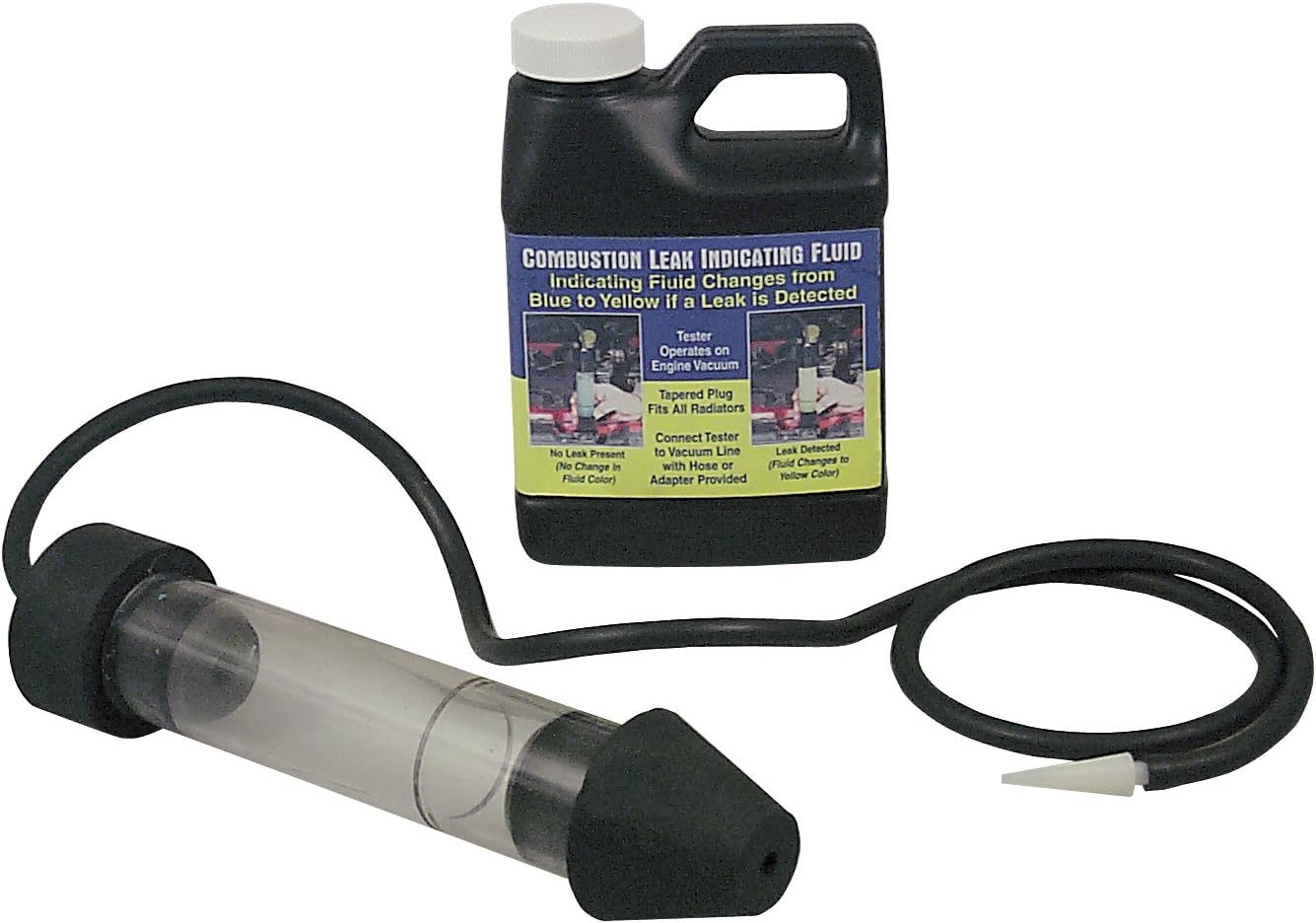
The Lisle 75500 Combustion Leak Detector is a precision automotive diagnostic tool that uses a color-changing fluid to quickly reveal combustion leaks caused by faulty head gaskets, cracked blocks, or warped heads. Designed for gasoline engines with a vehicle-specific mounting system, this lightweight and easy-to-use device ensures fast, reliable detection to keep your engine running smoothly and avoid costly repairs.


| ASIN | B0007ZDRUI |
| Brand Name | Lisle |
| Customer Reviews | 4.4 4.4 out of 5 stars (295) |
| Global Trade Identification Number | 00083045755005, 00830457550052 |
| Item Weight | 136 g |
| Manufacturer | Lisle |
| Material Type | Plastic, Rubber, Metal |
| Measuring Range | Anwesend - Abwesend |
| Model | 75500 |
| Mounting Type | Vehicle-specific mounting |
| Output Type | analog |
| Specific Uses For Product | automotive |
| Style Name | Modern |
| UPC | 830457550052 083045755005 |
| Unit Count | 1 Count |
D**R
For a gasoline engine cooling system. May work with diesel, but I doubt it, since I believe that diesels put out less hydrocarbons. I think this company makes a diesel version of this kit. Make sure the cooling system is full, install this glass globe on the radiator opening/surge tank opening, fill with the magic mystery fluid, and connect it to a vacuum source. (Either to engine vacuum, or use a mity-vac style vacuum gun.) If there is a crack around the combustion cylinder, or a faulty head gasket, then you should see the magic mystery fluid change colour. This is just another quick way to check for combustion leaks. Other methods may be performing a cooling system pressure test, and checking for coolant on top of the pistons. Or, install a pressure test gauge on the cooling system, keep it at zero PSI, and run the engine. A bad head gasket may push pressure into the cooling system, and make the pressure gauge needle jump up. Or, perform a cylinder compression test.
E**D
Funciona bien , hay que tener cuidado de no contaminar la muestra con anticongelante.
C**K
Works as intended - luckily for me, running the test twice yielded a negative result. When I exposed the blue fluid to the tailpipe exhaust, it turned yellow after about 30 seconds, so the fluid is definitely reactive to exhaust fumes. Yes, you need to find an external vacuum source - this is something that people should know how to find if they're performing a test like this on their own and shouldn't be complaining about - especially for the price of the product. There are other more expensive kits that have a hand pump, if that's something you'd rather have, get that kit instead. Bottom line, this is easy to use, and is a great way to know for sure whether or not you need to replace a part that's costly to fix.
A**R
Product as described, authentic, easy to apply & fast shipping! Great seller & a great product!
A**G
Used this to confirm what was pretty certain, a head gasket leak. Sure takes the guesswork and time out of detecting head gasket leaks. I was already 95% certain one or both head gaskets were leaking using cylinder compression and leakdown tests and radiator pressure test. I like the ability to shutdown a cylinder bank and test for a leaking head gasket on one head or the other. Caution, if you do this, you will most certainly trip computer codes and the engine service light on the dash. You need to be aware that you have to check that your code reader (if you have one) will reset the engine service light. Not all will. Many will clear codes but not reset engine service light so you may have to got to a shop to have light reset. Some car models can be manually reset or there is some trick to reset. One of the other anecdotal aspects of this test is that you can tell which cylinder bank is leaking faster or slower. The color change for my testing was gradual, ie it went from blue to green to yellow. This shows that the color change is relatively proportional to the amount and rate of leakage. The color change for the right bank was pretty quick and the color change for the left bank took several minutes. I ran this several times on both a hot and cold engine. The results were generally reproducible.
Trustpilot
1 month ago
2 weeks ago